
The Circadian Code
What if better health depends not just on what you do, but when you do it? Dr. Satchin Panda reveals how your body’s internal clock shapes sleep, metabolism, and health.
Order now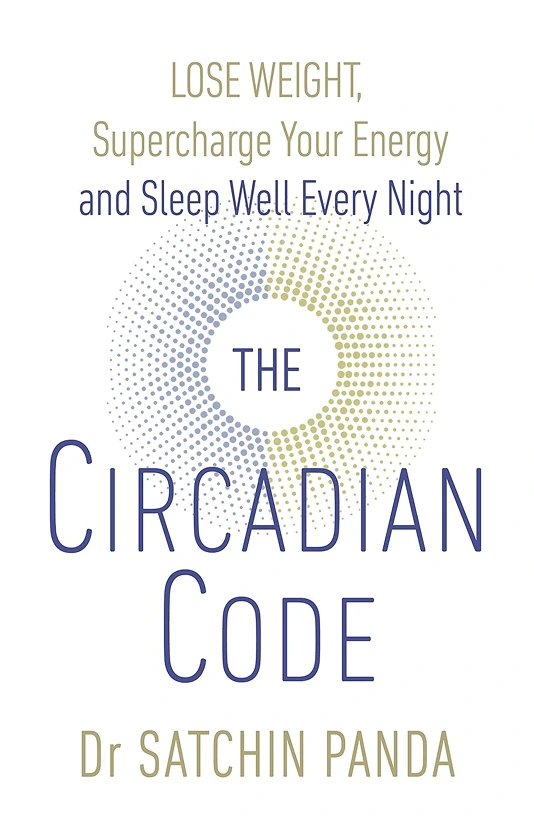
I study and share the wisdom of biological time to enable everyone live longer, healthier lives.
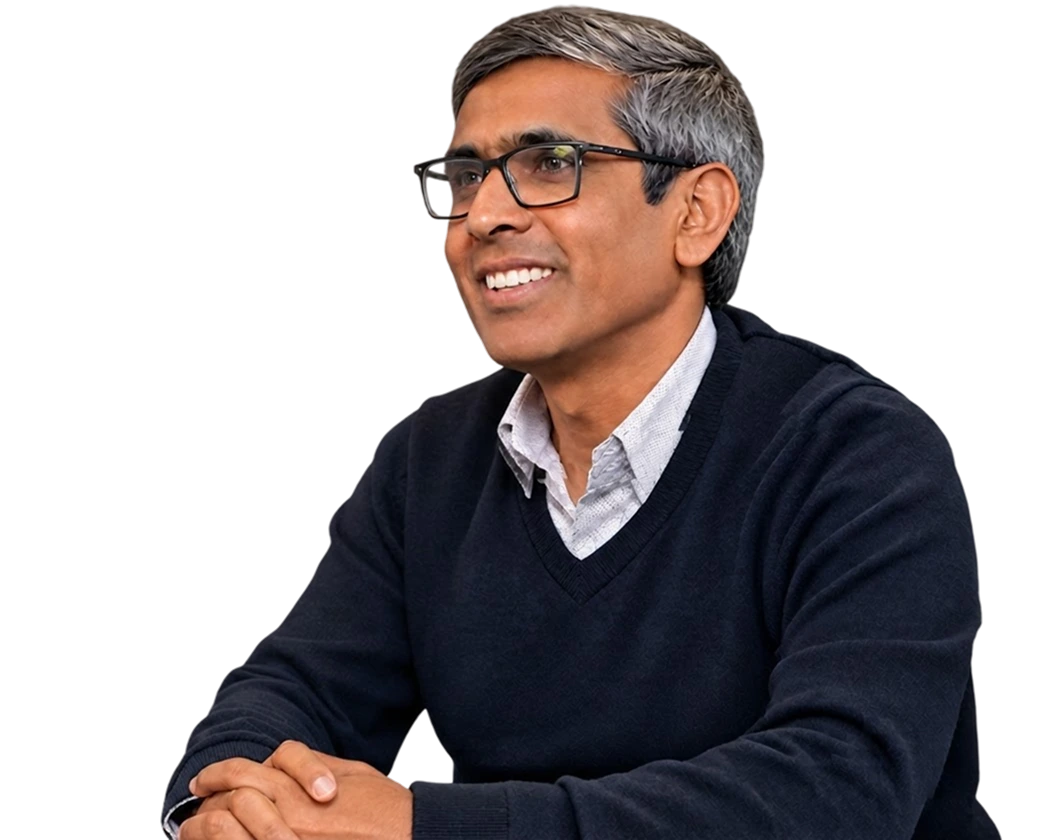
Explore Dr. Panda’s publications on circadian biology and its role in sleep, metabolism, health, and everyday life.
What if better health depends not just on what you do, but when you do it? Dr. Satchin Panda reveals how your body’s internal clock shapes sleep, metabolism, and health.
Order nowWhat if better health depends not just on what you do, but when you do it? Dr. Satchin Panda reveals how your body’s internal clock shapes sleep, metabolism, and health.
Order now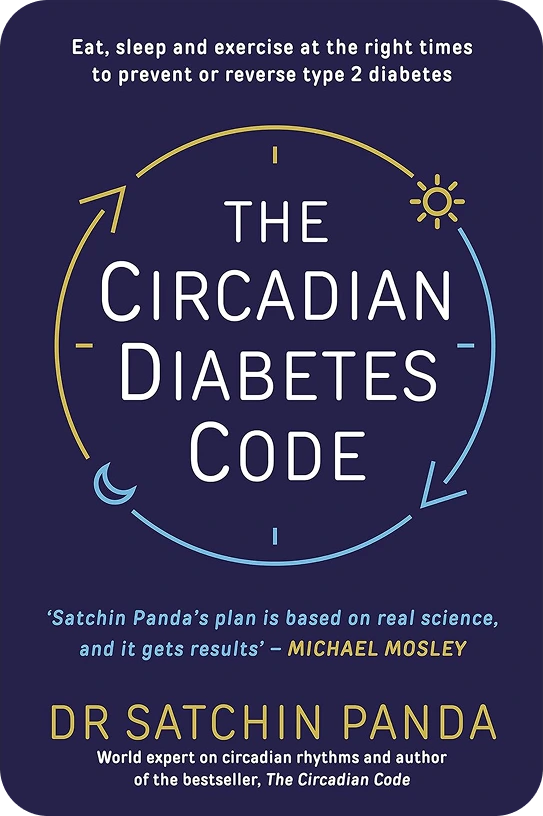
Explore Dr. Panda’s publication on circadian biology and its role in sleep, metabolism, health, and everyday life.
One idea at a time on circadian rhythm, light, sleep and the timing of food.
The basic unit of a long life is not a year. It is a day.
For a long time we assumed the master clock in the brain ran every other clock in the body. Light reaches the eye, the brain sets the time, and the organs follow.
We talk about vitamins and protein. We rarely talk about light, yet the body needs a daily dose of it.
Selected media features of Dr Panda’s research






170+
Scientific publications
350+
Seminars/lectures
150+
public lectures
750+
Collaborators and coauthors

Our brain and organs function with different hormones and chemistry at every hour of the 24 h day. Satchin studies this daily cycle from individual genes, cells, organs and brain to the whole body, thus yielding a complete and actionable understanding of human health, behavior and performance.
Satchin’s work spans genetics, molecular biology, multi-omics, preclinical laboratory research and human studies through multidisciplinary team science approach. He is deepening this line of enquiry by integrating wetware (laboratory research), software (in-silico and AI research) and hardware (wearable sensors and mHealth technology).
He shares his discoveries with the global audience through scientific and public talks, podcasts, and international best selling books. He collaborates as advisor to individuals and organizations committed to enhance health and performance of everyone from new born to super centenarians.
Satchin grew up in rural and semi-urban parts of Odisha, India. Growing up. he was intrigued by the seasonal and daily rhythms in nature. His undergraduate education in Agriculture deepened his curiosities in these rhythms; why certain plants flower in the spring or winter, why some plants open their flower in the morning or afternoon, why many animals have babies in spring time, why some birds migrate in specific season, why we go to sleep at night, while rodents and frogs wake up and venture out in the evening.
He soon realized that most of the research in biological science has been on what and how much of nutrition, medicine or daily practices to improve the health of plants, humans and animals, but very little was known about how living systems keep track of time and how we can use the wisdom of biological timing to further elevate health and performance. He gained the necessary skills and knowledge during his MSc degree, work at International Flavor and Fragrance (India), and at University of Manitoba, Winnipeg and finally his PhD at Scripps Research, San Diego. During his postdoctoral training at (currently) Novartis Research, San Diego, he gained skills in team sciences to leverage expertise in biology, chemistry and engineering to ask bold questions and discover biological principles.
His notable work led to the discoveries of how the pace of the clock is set. Satchin’s PhD thesis work linked metabolism and specifically NAD metabolism with circadian clock by demonstrating mutation in a gene regulating NAD level can slow down the plant clock. This work inspired subsequent studies in animals and humans linking metabolism to circadian clock. In collaborative work he also discovered that ROR class of nuclear hormone receptors play an important role in stabilizing the pace of the clock, thus linking metabolism and immune function to circadian clock. His work on epigenetic (chromatin) regulation setting the pace of the circadian clock in animals inspired several independent studies linking epigenetics with circadian rhythm.
How do humans and animals reset their circadian clock to seasonal change in day length of when we readjust to the new timezone after jet travel? His pioneering study led to the discovery that a blue light sensing protein called melanopsin, and a small subset of retinal ganglion cells (ipRGCS) that produce this protein play an indispensable role in correct alignment of circadian rhythms to the ambient lighting conditions. This discovery was corroborated by several independent contemporary studies. Further characterization of this light sensing system in human postmortem retina and through novel drug like molecules specifically inhibiting melanopsin function established quality, intensity and timing of light for sustaining circadian rhythm, improving mood, alleviating mental health issues and even improving health outcomes in hospitals.
Circadian Rhythms are observed in almost every function of the brain and body; from sleep and activity to appetite, digestion, kidney function, immune function, hormones and DNA repair to even how our stem cells divide and grow. To gain a molecular understanding of how circadian rhythm regulates these processes, he has spearheaded several whole genome time-series gene expressions and function studies in 60+ individual tissues, brain regions and even the gut microbiome. These studies spanning different species, age and sex have discovered key genes and pathways that work in individual tissues to produce daily rhythms in physiology, metabolism and behavior. They also indicated potential to improve efficacy and/or reduce adverse side effects of hundreds of drugs currently used to treat human or animal diseases. These discoveries also attracted a new wave of scientists from around the world to follow up on his findings by studying mechanistic link between circadian rhythms and human health.
Satchin’s landmark study asked a simple question, if the brain block that tracks day:night cycle that presumably controls the liver clock, then what happens if mice that typically eat at night are given food during the day. His study discovered that the circadian clock in the liver follows when mice eat and not when the eyes see light or darkness. Hence food timing emerged as a powerful approach to synchronize circadian rhythm in metabolism and physiology. This led to time restricted feeding or eating in which all food is consumed within a consistent window of 8-10 h (no longer than 12) to sustain robust circadian rhythm. Such a feeding-fasting cycle in animals protected them against numerous diseases. Independent studies also showed TRF with right nutrition can extend longevity in animals. These foundational studies from Satchin’s lab inspired over 150 clinical trials around the world to test the effect of TRE on human health.
His research has also shown that healthy circadian rhythms reduce risks for several diseases of aging from inflammation, cardiovascular diseases, cancer and dementia. Conversely, many of these chronic diseases also dampen circadian rhythms. Therefore, sustaining healthy circadian rhythm through lifestyle interventions or drugs that target circadian clock can be effective in lessening disease risks and accelerating cure from diseases like cancer.
Exercise improves overall health of body and mind. At the same time some who exercise a lot may suffer from compromised health. But why? His recent research addressing these questions has led to surprising outcomes. His group has built a molecular atlas of exercise by systematically studying which genes, proteins and metabolites in up to 20+ different organs change in response to healthy exercise and how exercise changes the epigenetic mark in muscle cells. At the same time, his group also discovered that exercising with insufficient nutrition can wreak havoc on the body by compromising the function of almost every organ and inverting the circadian clocks in most parts of the brain. These studies are leading to better biomarkers of healthy or unhealthy exercise, and optimum nutrition for performance and recovery.
To monitor and optimize circadian rhythm in humans, Satchin developed an app and related digital platform to collect and analyze daily patterns of sleep, activity and eating patterns and relate them to physiology through wearables including continuous glucose monitor devices. These collaborative studies with scientists and clinicians from around the world have revealed widespread circadian rhythm disruptions, and conversely, health improvements through personalized circadian lifestyle interventions.
For science to impact society, scientific discoveries should be shared with everyone. In addition to publishing scientific papers and sharing discoveries through scientific presentations, Satchin shares his science through podcasts, public lectures and popular books.
Whether you are curious about my work, want to work with me, or want me to work with you, I would welcome hearing from you.
The best way to reach me and get my attention is right here.
Would you rather talk?
I offer weekly office hours, an open space for conversation.
Sign up for office hoursBased in San Diego, California